What is a Life Diagnostic?
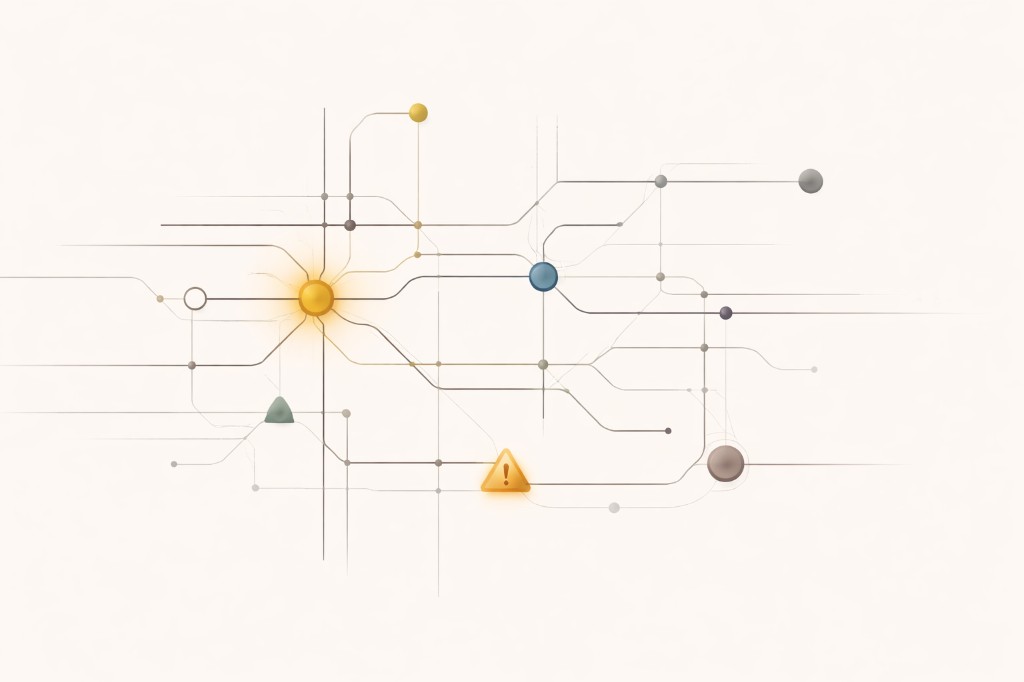
A life diagnostic is a system that continuously monitors interconnected life domains, detects structural degradation, and flags failure modes before they produce visible damage. It is not tracking (recording what happened), not behavioral coaching (managing your routines), and not wellness (encouraging better habits). Free60 is the first consumer implementation of this concept.
Why do existing categories fail?
The consumer software market has settled into a few dominant categories for personal management: habit trackers, wellness apps, coaching platforms, and personal dashboards. Each category has a structural limitation that prevents it from functioning as a diagnostic system.
Habit trackers operate on a completion model. You define activities, the app records whether you did them, and progress is measured in streaks and compliance rates. The fundamental flaw: completion says nothing about structural stability. You can complete every habit on your list while your financial buffer erodes, your sleep architecture degrades, and your calendar buffer drops below sustainable levels. Habit trackers measure effort. They cannot measure structural health.
Wellness apps operate on an encouragement model. They suggest behaviors (meditate, hydrate, move more), reward compliance, and frame everything through a lens of improvement. The fundamental flaw: they are single-dimensional. A meditation app cannot detect that your stress load is rising because your time allocation has compressed, your sleep consistency has drifted, and your financial runway is shortening simultaneously. Wellness apps address symptoms within one domain. They cannot see cross-dimensional cascades.
Coaching apps operate on a prescription model. They assess your current state (usually through a questionnaire), then prescribe a plan: do this, stop that, focus here. The fundamental flaw: they assume the user needs to be told what to do. Analytical, self-directed professionals do not need prescriptions. They need accurate diagnostics. Telling a senior operator to "prioritize self-care" when their actual problem is that their Wealth dimension is constraining their Capacity dimension is not useful. It is noise.
Personal dashboards (Notion templates, spreadsheet systems, custom trackers) operate on a display model. They aggregate data into a visual layout. The fundamental flaw: they have no diagnostic intelligence. A dashboard shows you raw numbers. It does not know what the numbers mean in combination, what thresholds matter, or when a trend has shifted from normal variance to structural drift. You are the diagnostic engine, and you are too close to the data to see it clearly.
What makes a diagnostic different?
A diagnostic system has four properties that distinguish it from tracking, coaching, and wellness tools:
It reads sensors, not surveys. Wherever possible, a diagnostic system pulls data from automated sources rather than asking you how you feel. Apple Health (iOS) and Health Connect (Android) provide sleep, activity, and physiological data without any user input. Financial accounts provide transaction data. The less the system depends on self-reporting, the more accurate the signal. Self-reported data is biased by mood, memory, and motivation. Sensor data is not.
It detects patterns, not events. A single bad night of sleep is an event. Five consecutive nights of increasing bedtime variance is a pattern. A diagnostic system distinguishes between the two. It ignores single-day fluctuations and flags sustained directional changes. This is the difference between noise and signal. Most consumer tools react to events. A diagnostic reacts to patterns.
It models cross-dimensional interaction. Health, Wealth, and Capacity are not independent. Degradation in one cascades into others. A diagnostic system models these relationships. When your sleep consistency drops, the system knows to watch for downstream effects in focus, financial decision quality, and schedule pressure. Single-domain tools are structurally blind to these cascades.
It diagnoses, educates, and guides -- without managing your behavior. A diagnostic system tells you what is happening. But a good one goes further: it explains why the failure matters, shows how it connects to other systems, and surfaces specific actions based on your data. Free60 does this through automated insight cards that generate a personalized feed every session. No motivation, no streaks, no prescribed routines. But you are never left staring at a number with no context. The final decision is always yours.
How does the vehicle diagnostic analogy apply?
The closest analogy to a life diagnostic is the OBD-II system in modern vehicles. Your car has hundreds of sensors monitoring engine temperature, fuel mixture, exhaust composition, transmission behavior, brake pad thickness, and dozens of other parameters. The OBD-II system reads these sensors continuously, compares readings to expected ranges, and flags anomalies.
When the check engine light turns on, it does not mean your car is broken. It means a sensor reading has deviated from the expected range in a way that warrants investigation. The system detected something. The mechanic diagnoses the specific cause. The owner decides what to do.
A life diagnostic follows the same architecture. Sensors (Apple Health / Health Connect, manual inputs) feed data to KPIs. KPIs compare current readings to personal baselines and thresholds. When a reading deviates in a sustained and significant way, the system flags it. The user investigates the specific dimension and lever to understand the cause. The response is theirs to determine.
Before OBD-II existed, vehicle maintenance was reactive: you drove until something broke, then fixed it. The diagnostic system shifted maintenance from reactive to predictive. You catch problems when they are small and cheap to fix, not when they strand you on the highway.
Personal life management is currently in the pre-OBD-II era. Most people operate reactively: they notice a problem when it becomes impossible to ignore, then scramble to address it. By that point, the damage is structural and expensive to repair. A burned-out executive does not need three months of rest because they had one bad week. They need it because dozens of small degradations compounded over months without detection.
Why hasn't this category existed before?
Three barriers prevented consumer life diagnostics from emerging:
Data availability. Automated health data collection only became viable with the maturation of Apple Health, Health Connect, and wearable sensors in the last decade. Before that, every health metric required manual entry, which introduced bias and reduced compliance. You cannot build a reliable diagnostic on self-reported data alone.
Cross-domain modeling. Building a scoring framework that spans health, wealth, and capacity requires a model that weights and aggregates across fundamentally different domains. This is a non-trivial design problem. How do you compare sleep consistency to savings rate? How do you aggregate them into a meaningful composite? The Freedom Index solves this through a layered KPI-to-lever-to-dimension-to-index architecture, but that framework did not exist in consumer software.
Market incentives. The app market rewards engagement. Streaks, badges, social sharing, daily notifications: these are features designed to maximize time-in-app. A diagnostic system is inherently low-engagement. If everything is stable, you check it briefly and move on. The business model for diagnostic tools conflicts with the engagement metrics that drive app store rankings and venture capital funding. Free60 was built to be accurate, not addictive, which is why it can prioritize diagnostic precision over daily engagement.
Who needs a life diagnostic?
A life diagnostic is most valuable to people whose lives are complex enough that manual monitoring is insufficient. Specifically: professionals managing significant responsibility across multiple domains simultaneously.
If you operate in a senior role, run a business, manage a family, maintain a portfolio, and try to preserve your physical health, you are running a complex system. The interactions between these domains create failure modes that no single-domain tool can detect. Your tracking spreadsheet cannot tell you that your declining sleep is about to cascade into financial decision errors because it does not model the relationship between those systems.
A life diagnostic is not for everyone. If your life has low complexity (few responsibilities, limited financial obligations, stable routine), you probably do not need one. The value scales with complexity. The more systems you are running simultaneously, the more you benefit from automated cross-dimensional monitoring.
Free60 is the first consumer tool built on this diagnostic architecture. You can explore the full system at free60.app.
Common questions
How is a life diagnostic different from a life audit?
A life audit is a one-time exercise: you sit down, evaluate each area of your life, assign scores, and make a plan. It is a snapshot. A life diagnostic runs continuously. It reads data streams, calculates KPIs, detects trend changes, and flags degradation in real time. An audit tells you where you were on the day you did it. A diagnostic tells you where you are heading right now.
Does a life diagnostic tell you what to do?
It does not prescribe routines or manage your behavior. But it does more than show a number. Free60 tells you what is degrading, explains the mechanism behind it, shows how failures cascade across systems, and surfaces specific actions based on your data. The assumption is that the user is capable of deciding what to do once they have accurate, contextualized information.
Why hasn't this existed before?
Three barriers: data availability, cross-domain modeling, and market incentives. Consumer health data only became accessible through Apple Health (iOS) and Health Connect (Android) in the last decade. Building a scoring system across three dimensions (Health, Wealth, and Capacity) requires a framework that did not exist in consumer software. And the market incentivized engagement-driven apps (streaks, badges, social feeds) over diagnostic precision. Free60 was built to be accurate, not addictive.
FREE60 is available now on the App Store. 14-day free trial included.
Download on the App Store