Free60 vs Wellness Apps
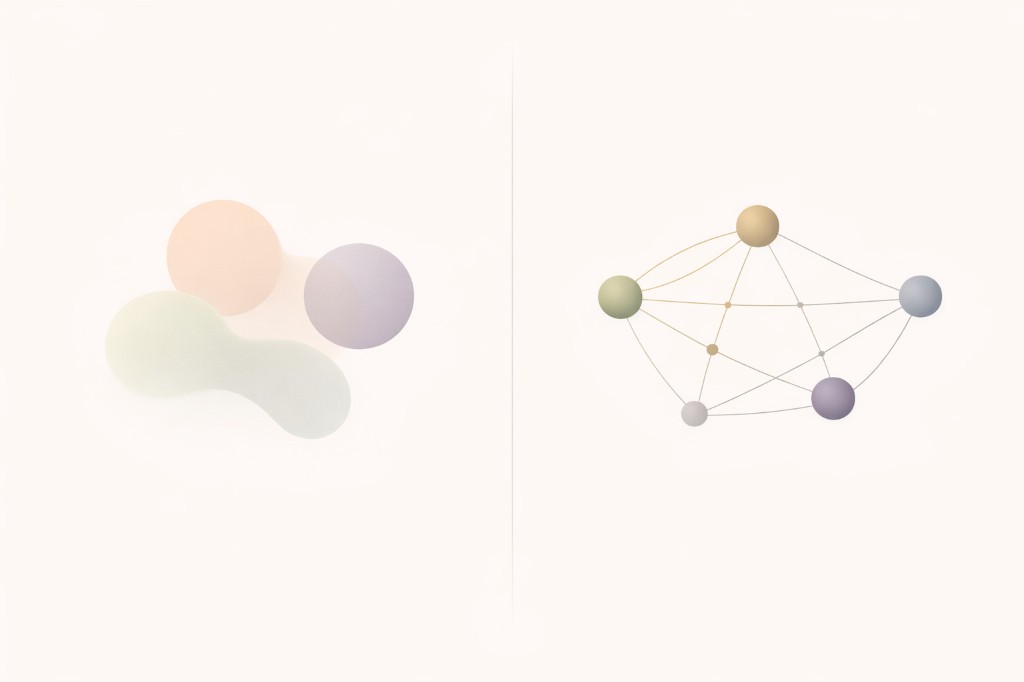
Wellness apps like Calm, Headspace, Noom, and MyFitnessPal focus on specific behaviors: meditation minutes, calories logged, mood entries, mindfulness streaks. They encourage, coach, and reward. Free60 does none of that. It measures structural stability across 3 dimensions using 26 KPIs and reports what is degrading. The difference is not incremental. It is categorical.
What do wellness apps actually do?
Wellness apps target a narrow slice of well-being and build a full engagement model around it. Calm delivers meditation sessions and sleep stories. Noom combines calorie tracking with behavioral psychology. MyFitnessPal logs food intake. Headspace structures mindfulness routines. Each app creates a contained environment for one or two behaviors, then uses daily engagement, streaks, notifications, and supportive messaging to keep you coming back.
The business model depends on engagement. If you stop opening the app, the subscription loses value. So the design is built around daily touchpoints: "You have not meditated today," "Log your lunch," "How are you feeling?" This daily engagement loop works well for building specific behavioral patterns. But it comes at a cost. The tool only sees what it is designed to see.
How does scope differ between wellness apps and Free60?
A wellness app operates within one or two domains. Calm covers mental wellness through meditation. MyFitnessPal covers nutrition through calorie counting. Even apps that claim broader scope (like Noom, which touches nutrition and behavioral patterns) still operate within Health.
Free60 operates across 3 dimensions: Health, Wealth, and Capacity. Each dimension contains 5 levers, and the full framework covers 26 KPIs. This is not a feature comparison; it is a structural difference. A meditation app cannot detect that your financial liquidity is eroding. A calorie tracker cannot flag that your boundary integrity at work is collapsing. Free60 can, because it measures all three dimensions simultaneously. For more on this structural model, see what Free60 actually is.
How does the approach differ: encouragement vs detection?
Wellness apps encourage. Their tone is warm, supportive, and motivational. "Great job completing your session." "You are on a 7-day streak." "Remember, small steps lead to big changes." The design assumes the user needs ongoing motivation to sustain behavior.
Free60 detects. Its tone is diagnostic and neutral. A KPI is either within threshold, drifting, or in a failure state. The system does not congratulate you for a stable score. It does not console you for a declining one. It reports what the data shows, explains the mechanism, and surfaces specific actions based on your data. The 4 AI guides (Halo, Luma, Auri, Nexo) explain what a score means, what patterns the data reveals, what structural risk exists, and where to focus. They do not motivate, gamify, or prescribe routines. The assumption is that the user is competent and self-directed.
What kind of effort does each require?
Wellness apps require daily engagement. That is the design. You meditate for 10 minutes. You log three meals. You complete a mood check. If you skip a day, the streak breaks, the app sends reminders, and the experience degrades. The app needs your daily attention to function.
Free60 is designed for periodic interaction, not daily engagement. Automated KPIs pull data from Apple Health (iOS) or Health Connect (Android) passively: sleep patterns, activity levels, heart rate variability, resting heart rate. Manual KPIs require periodic updates: nutrition configuration, financial snapshots, time allocation. The system runs its diagnostics whether you open it daily or weekly. It does not need your constant attention. It needs your data, and most of that data arrives automatically.
For professionals with demanding schedules, this difference is material. An app that requires 15 minutes of daily engagement is another demand on your time. A diagnostic system that runs in the background and surfaces what matters is a structural reduction in friction, which is the opposite of what habit-based tools deliver.
What happens when you stop using each?
When you stop opening a wellness app, your streak breaks. Your data stops accumulating. The app has nothing to show you. It sends increasingly persistent reminders to bring you back. Eventually, you either return or delete it. The tool is inert without your daily input.
When you stop opening Free60, the automated KPIs keep calculating. Apple Health (iOS) or Health Connect (Android) data continues flowing. Sleep patterns, activity levels, and physiological markers are still being measured. The next time you open the app, the system has a full diagnostic picture of the period you were away. It did not need you to check in. It was running.
This is a structural advantage for people who have periods of high intensity at work, who travel frequently, or who simply do not want another app competing for their daily attention. The diagnostic runs regardless.
What is the real cost of the narrow scope?
The real cost of a narrow wellness app is hidden instability. You can meditate every day for six months and feel a sense of progress in that single domain. Meanwhile, your financial buffer is shrinking because expenses crept up. Your sleep timing is drifting because work demands shifted your schedule. Your calendar buffer is disappearing because reactive work keeps consuming every open block.
None of these cross-domain cascades are visible inside a meditation app. They are not visible inside a calorie tracker. They are not visible inside any single-domain tool. They are only visible when you measure across dimensions simultaneously and look for patterns of structural degradation.
That is what the Freedom Index does. It aggregates 26 KPIs across 3 dimensions into a single structural score from 0 to 360. A cascade in one dimension that spills into another shows up as a pattern, not as an isolated data point. That level of visibility requires a diagnostic system, not a collection of wellness apps.
Is Free60 trying to replace wellness apps?
No. If you use Calm for meditation and it works for you, keep using it. If MyFitnessPal accurately tracks your nutrition intake, that data is useful. Free60 is not a replacement for single-domain tools. It is a different category entirely. A life diagnostic does not compete with a meditation timer any more than a full-body MRI competes with a blood pressure cuff. They operate at different levels of the system.
The question worth asking is: do you have visibility into whether your overall structure is stable? If the answer is no, and it is no for most people, regardless of how many wellness apps they use, then the gap is diagnostic, not behavioral. Free60 exists to fill that gap.
Common questions
Is Free60 a wellness app?
No. Free60 is a structural diagnostic. Wellness apps focus on specific behaviors like meditation, nutrition logging, or mood tracking, and use encouragement to maintain engagement. Free60 measures structural stability across 3 dimensions (Health, Wealth, and Capacity) using 26 KPIs. It diagnoses what's failing, explains why it matters, and surfaces specific actions based on your data. It does not encourage, coach, or prescribe routines.
Does Free60 include meditation or mindfulness features?
No. Free60 does not include meditation sessions, breathing exercises, mood journals, or guided mindfulness. It measures structural indicators like focus stability, schedule drift, and buffer availability within the Capacity dimension. These indicators detect operational overload. They do not prescribe meditation as a fix.
FREE60 is available now on the App Store. 14-day free trial included.
Download on the App Store